Where to Find It
Ripe soursop lasts about two days, which is why you have probably never seen one in a supermarket. Here is what is realistically available, and how to tell the good from the sweetened.
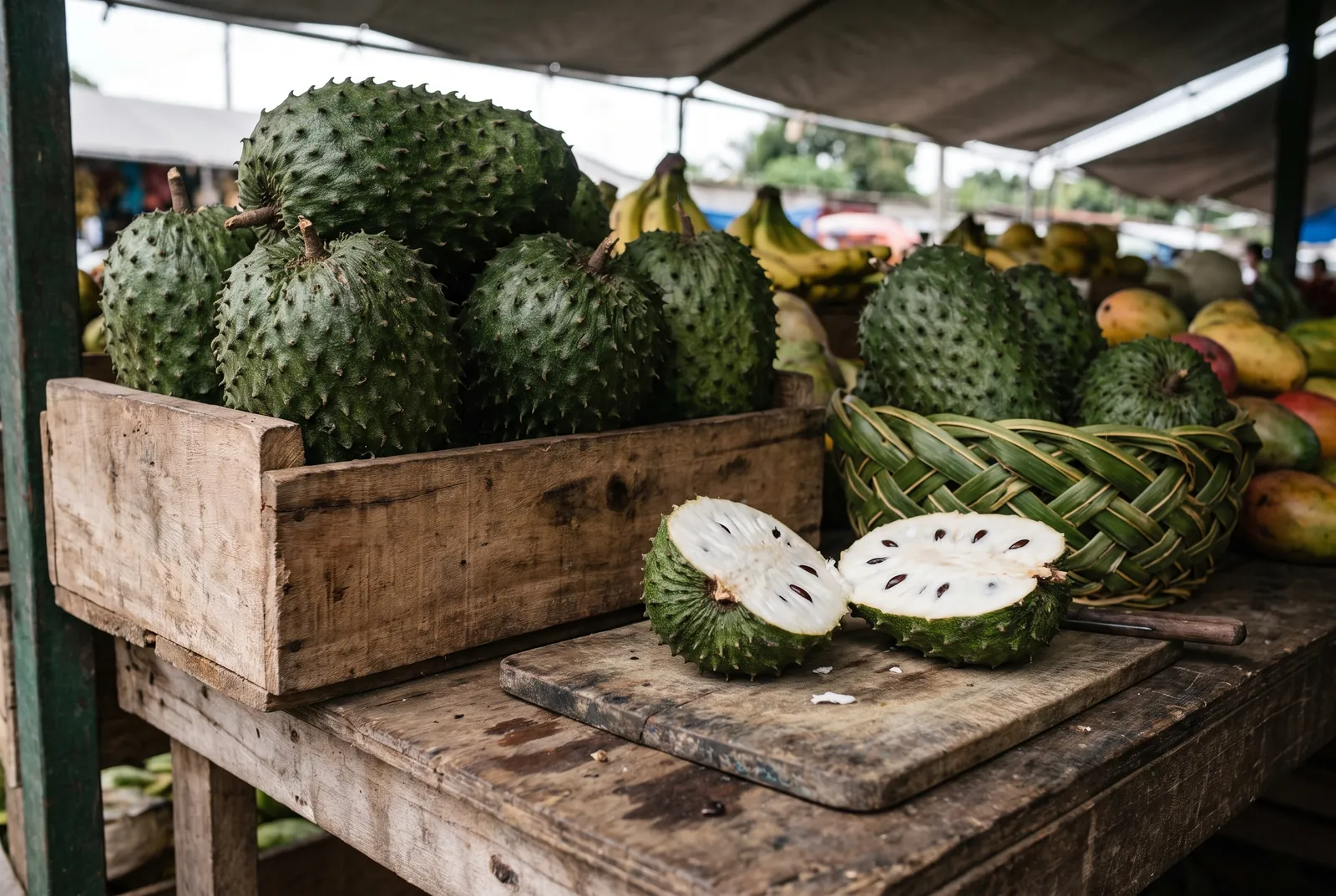
Fresh, in person
Look in Latin American, Caribbean, Filipino, Vietnamese and wider Southeast Asian grocers — ask for guanábana, graviola or guyabano, since that is what the sign will say. Florida, southern California and Texas see local fruit in late summer and autumn. Buy it firm and ripen it at home; see the ripeness guide.
Frozen pulp
The same grocers keep deseeded pulp in the freezer year-round, usually in 400 g packs. Nutritionally close to fresh and vastly more practical. Read the ingredients: it should say soursop, and ideally nothing else.
What soursop costs, and why the spread is absurd
Soursop trades on no commodity exchange and has no live price index. What follows is dated reference points from named sources — the same fruit priced at three points in the chain.
At origin — wholesale in a producing country
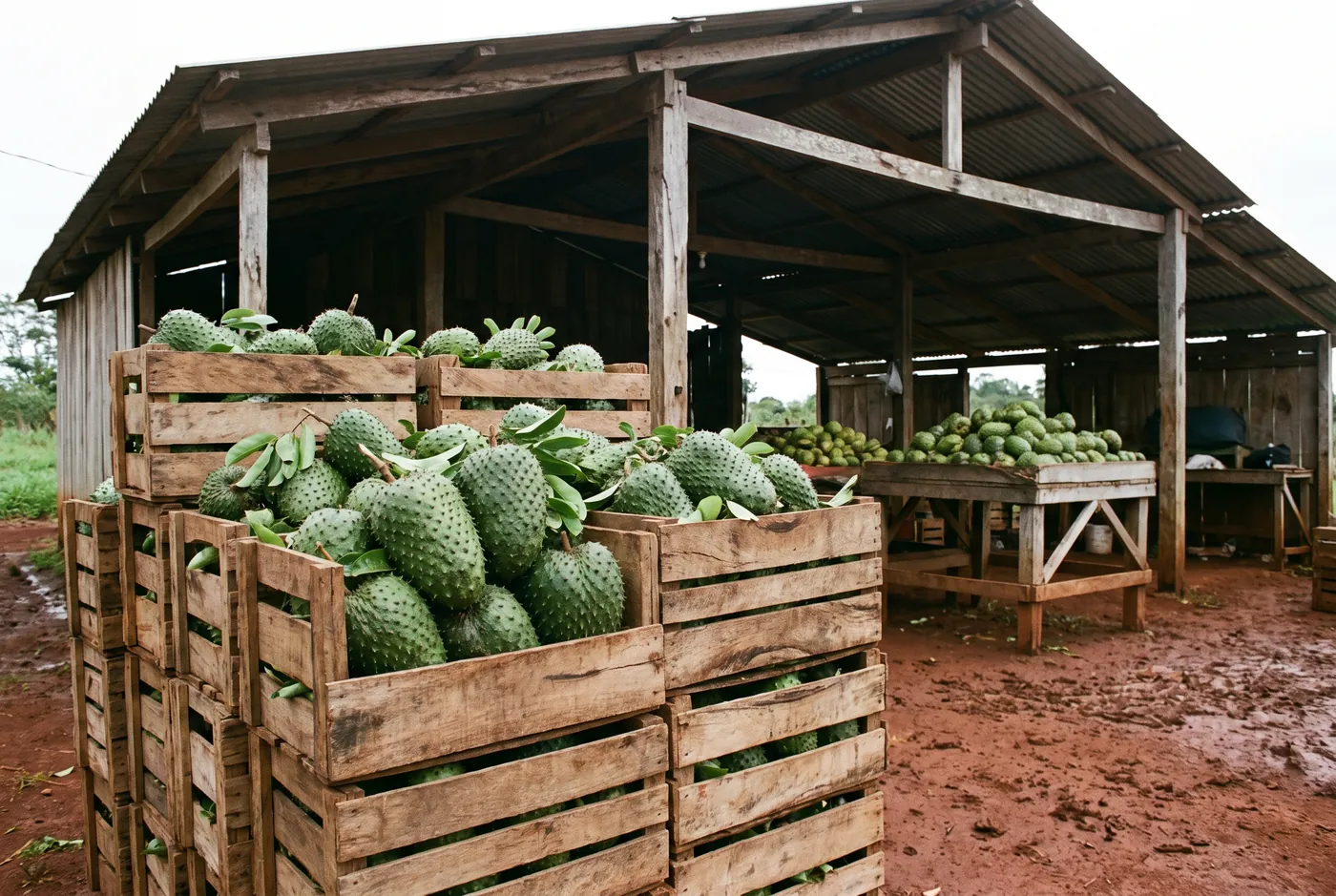
Where soursop is grown it is an ordinary fruit at an ordinary price. Colombia is one of the few origins with published wholesale series.
Source: Tridge, Colombia fresh soursop. Wholesale, not farmgate — the grower receives less.
Crossing a border — export and import
This is where the number stops behaving. A fruit that is ripe for two days has to fly, and export prices swing wildly year to year.
Source: Tridge Ecuador and United States price pages.
On the shelf — US specialty retail
What you actually pay, if you can find it fresh at all. Direct-from-grower sellers price by the box rather than the pound.
Sources: Central Market (per-pound retail) and Miami Fruit (box sizes). Checked September 2026.
The one number worth remembering
Roughly $1.63/kg at origin against about $26/kg on a US shelf — a spread of more than fifteen times. Almost none of that is margin on the fruit. It is airfreight, spoilage and the two-day ripe window doing the work, and it is the single best explanation for why most people meet soursop as frozen pulp or juice rather than as fruit.
These figures are dated snapshots from named third-party sources, not a live feed, and they move. Treat them as orders of magnitude rather than quotes.
How to read a soursop juice label
This is where most of the difference sits. Four checks, in order of how much they matter.
- Juice or nectar? “Nectar” is a regulated term meaning diluted juice, usually with added sugar or syrup. Soursop is sold as nectar far more often than as juice. If the front of the pack says nectar, you are buying mostly water and sugar.
- From concentrate, or not? Concentrate is juice that was boiled down for shipping and reconstituted with water. It is cheaper and it costs you aroma, some vitamin C, and character. “Not from concentrate” is a meaningful mark.
- Is there pulp? The fiber benefit lives in the pulp. Clear, filtered juice has had it removed. A label that specifies “with pulp” is telling you something real.
- What else is on the ingredient list? The best answer is: soursop. Then check the sugar line — the fruit already brings around 30 g of natural sugar per cup, and plenty of products add more on top of that.
SOPREME — the pulp kept in, and the testing published
Most soursop juice reaches the shelf with no published testing at all, which is why a “100% juice” label on its own tells you very little. SOPREME is the exception we point people to.
- 100% soursop juice, with the pulp retained
- Never from concentrate, and no added sugar
- Independent batch testing for identity and purity
- BRIX verified against the natural range for real soursop
- Glycemic tested on the finished juice
- Pressed from whole ripe fruit, never diluted
BRIX verification is the substantive one. It is a measurable check that the juice sits in the natural sugar range of genuinely pressed soursop — which is how dilution and reconstituted concentrate get caught, the two things that make a “100% juice” claim meaningless.
The other formats
Leaf tea
Look for whole or cut dried Annona muricata leaf rather than a blend where soursop is a minor ingredient behind several other botanicals. Caffeine-free; steep longer than black tea. SOPREME’s guide to soursop tea covers brewing.
Bitters and tinctures
Almost always multi-botanical blends, and the proportion of actual soursop varies enormously. Check whether soursop leads the ingredient list or trails it, and what the serving size really is. Background: what soursop bitters are.
Cooking with it
Pulp blends into agua fresca, ice cream, sorbet and smoothies, and it pairs unusually well with lime and coconut. Do not cook it hard — heat flattens the aroma fast. Starting points: soursop recipes.
Growing your own
Viable outdoors only in USDA zone 10 and warmer — south Florida, the Hawaiian islands, parts of southern California and the tropics proper. Anywhere colder and a single frost ends it.
Seed germinates readily and stays viable for months, but seedlings take three to five years to fruit and will not come true to the parent. Container growing under glass is possible and people do it; expect a shy crop, and expect to hand-pollinate, because the beetles that do the job in the tropics will not be visiting your greenhouse.