The Tree
A modest evergreen, no taller than a two-storey house, that flowers directly from its own trunk and produces the largest fruit of its genus.
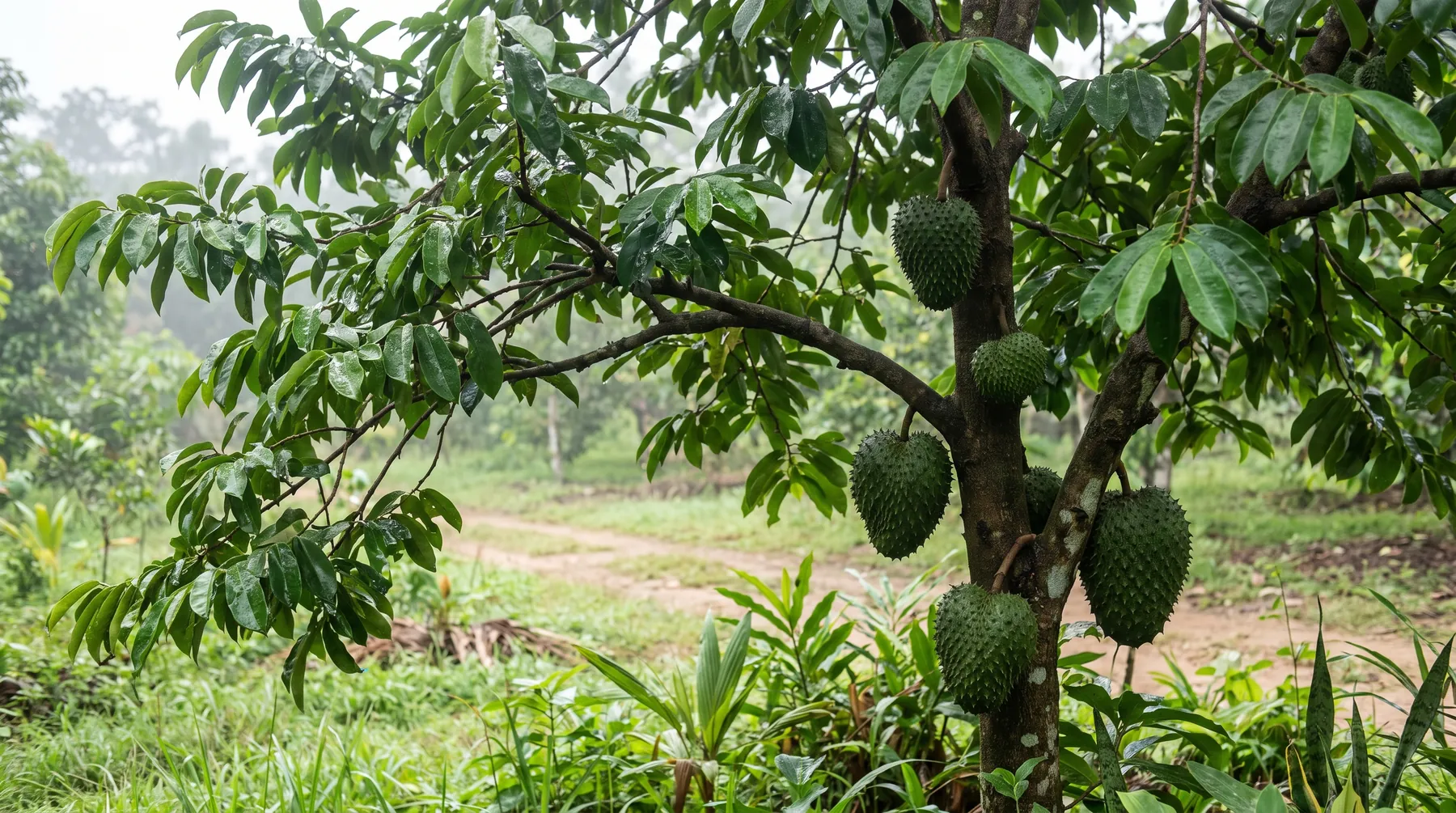
- Evergreen, 4–10 m, native to the tropical Americas and now grown across four continents.
- Killed by frost, which is the single reason you rarely see the fruit outside the tropics.
- Three to five years from seed to first crop, and hand-pollinated in most commercial orchards.
Tap a number to read what each part is.
| Kingdom | Plantae |
| Order | Magnoliales |
| Family | Annonaceae — the custard-apple family |
| Genus | Annona — roughly 170 species, including cherimoya and sugar-apple |
| Species | Annona muricata L., described by Linnaeus in 1753 |
Habit and form
Size
Reaches 4–10 m, most often 5–8 m — small enough that the fruit is picked by hand from the ground or a short ladder. The canopy is open and irregular, with low branching.
Leaves
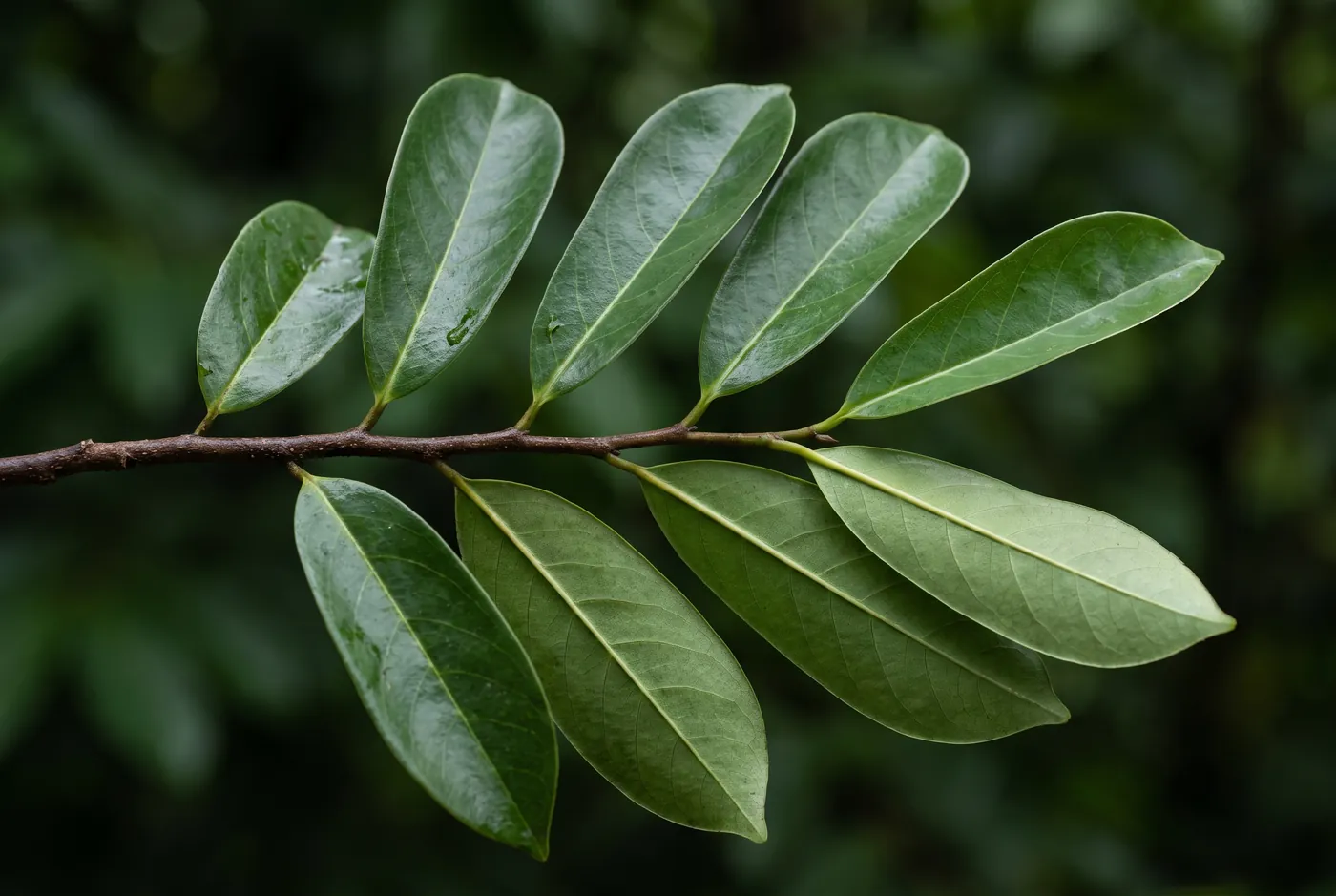
Evergreen, alternate, oblong and 8–16 cm long, dark and glossy above, paler beneath. Crushed, they smell sharply aromatic. These are the leaves dried for soursop tea.
Flowers
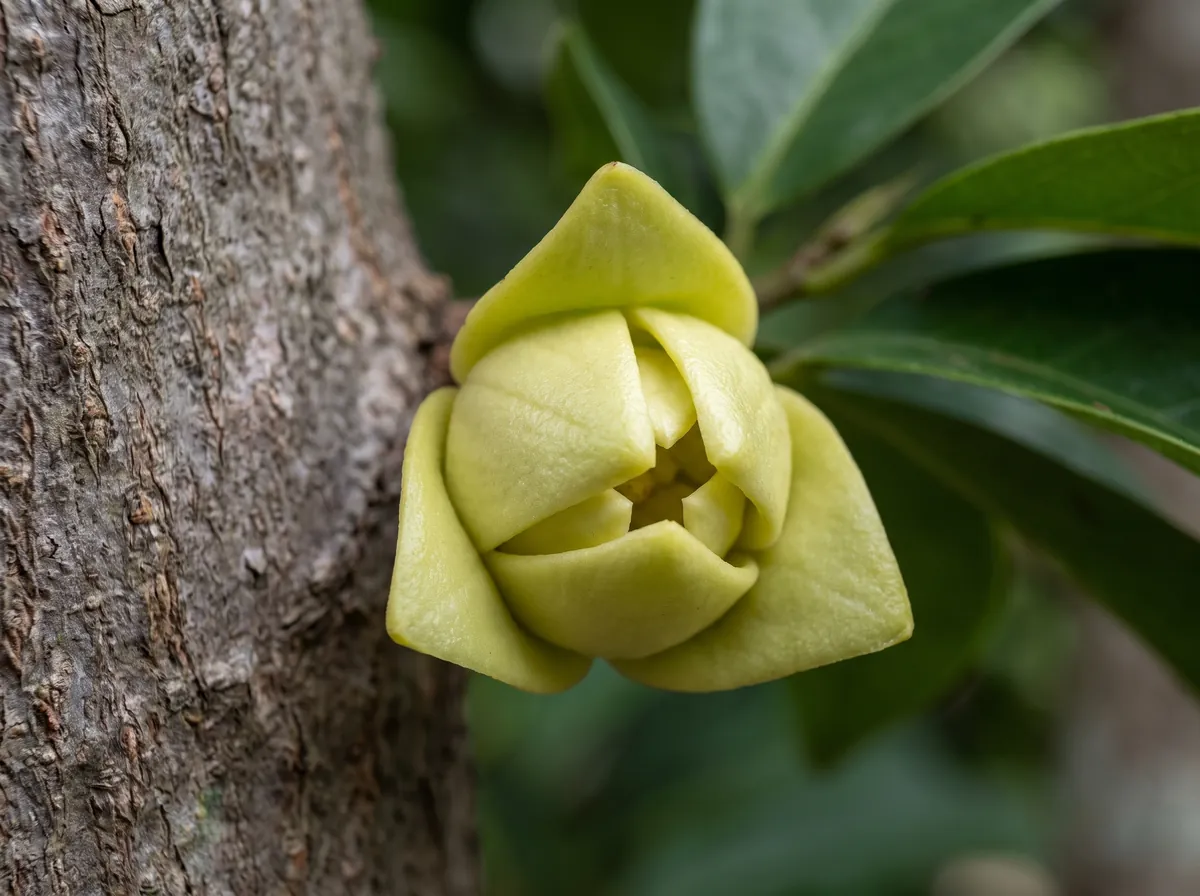
Yellow-green, fleshy and triangular, with three thick outer petals and three smaller inner ones. They emerge cauliflorously — directly from the trunk and old wood, not only from new twigs.
The pollination problem
Soursop flowers are protogynous: the female phase finishes before the male pollen is released, so a flower cannot easily pollinate itself. In the wild the job falls to small sap beetles (Nitidulidae), which are unreliable visitors. Natural fruit set is consequently poor, and commercial growers routinely hand-pollinate with a brush, collecting pollen in the afternoon and applying it the following morning. It is one of the reasons soursop stays expensive.
Where it grows, and where it refuses to
Native range. The tropical Americas — the Caribbean islands, Central America and northern South America. It has been cultivated there long enough that the precise wild origin is debated.
How it traveled. Spanish traders carried it across the Pacific to the Philippines in the sixteenth century, and from there it spread through tropical Asia. Today some of the largest plantings are in Indonesia, Vietnam, the Philippines and Thailand, alongside Mexico, Brazil, Colombia, Venezuela and West Africa.
What it needs. Hot, humid lowlands: roughly 25–28 °C, high humidity, and reliable rainfall. It grows well from sea level to around 1,000 m.
What kills it. Cold. The tree is damaged by brief exposure near freezing and killed outright by a real frost, which confines it to USDA zone 10 and warmer. That single limitation is why soursop is almost never sold fresh in North American and European supermarkets.
From seed to fruit
- Propagation. Usually from seed, which stays viable for months; superior selections are grafted onto seedling rootstock.
- First crop. Three to five years from seed; grafted trees can fruit sooner.
- Flowering. More or less year-round in the wet tropics, with one or two main peaks.
- Development. Fruit takes roughly four to six months from pollination to full size.
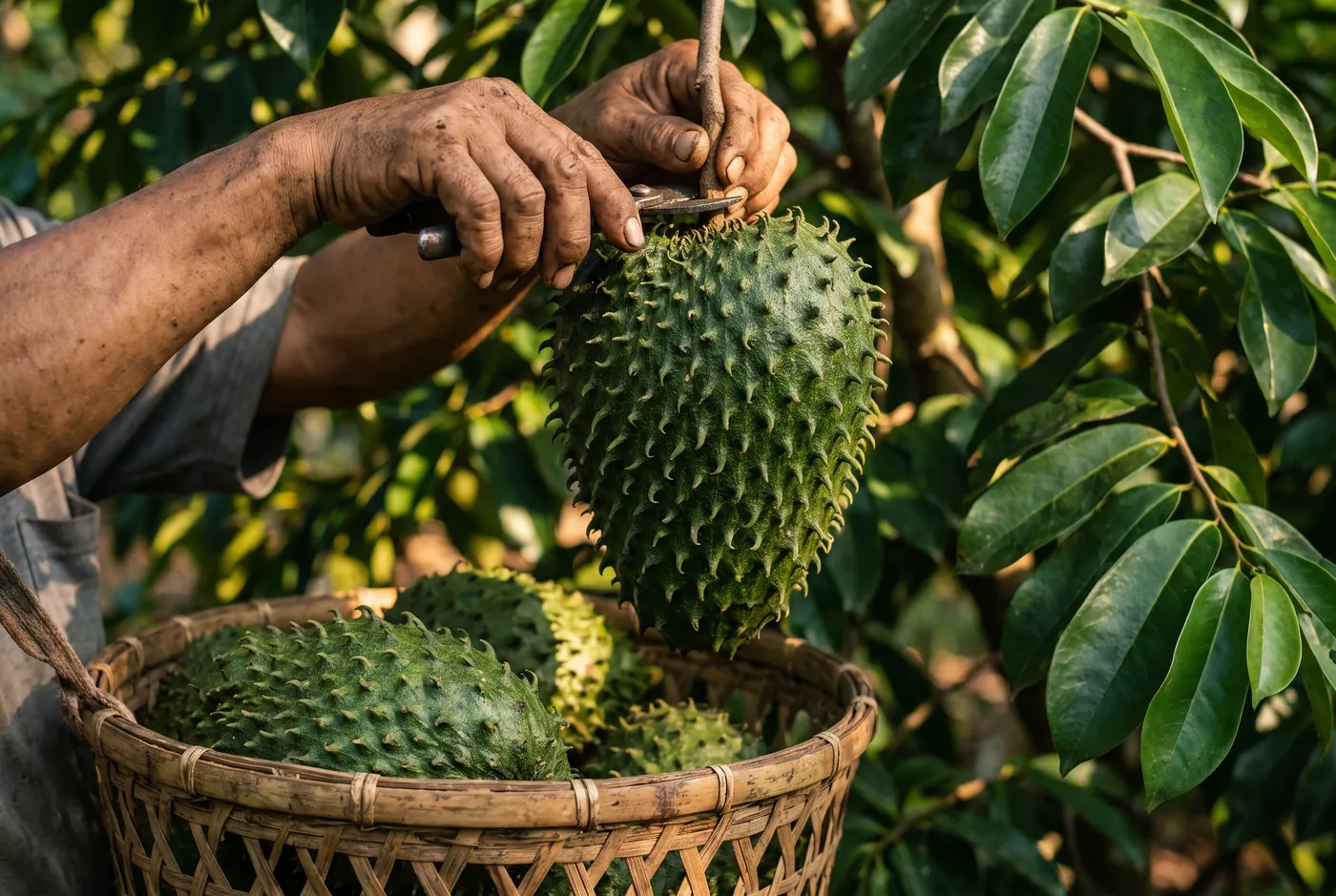
- Harvest. Picked mature but still firm, then ripened off the tree. Left to soften on the branch, it drops and bursts.
On the farm
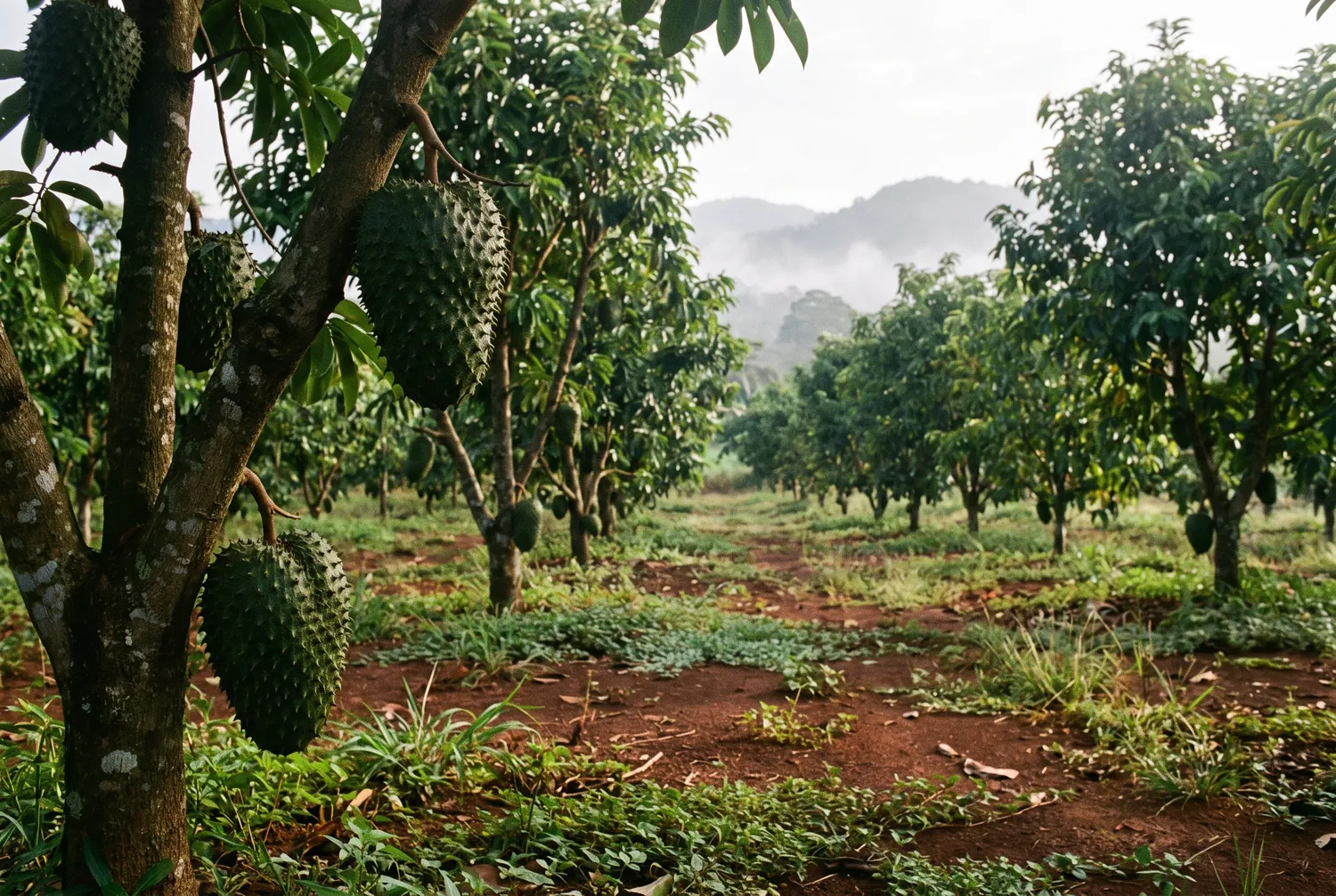
Soursop is overwhelmingly a smallholder crop. It is picked by hand, firm and unripe, and moved fast.
One tree, a great many names
If you are searching the research literature, this list is the single most useful thing on this page. Studies are published under all of these.
The leaves are a separate product
Worth stating clearly, because the two are constantly conflated: soursop fruit and soursop leaf tea are not the same thing. They come from the same tree, but they are different plant tissues with different chemistry, different traditional uses and different research literatures.
The dried leaf is brewed as a naturally caffeine-free herbal infusion. It carries the leaf’s polyphenols and flavonoids, and a longer steep than ordinary tea. It does not carry the fruit’s vitamin C or fiber — and most of the laboratory studies you will find attached to “soursop” headlines were run on concentrated leaf extract, not on the fruit and not at tea strength.
If you want a fuller treatment of the leaf specifically, SOPREME’s guide to soursop leaves covers identification and brewing in more detail.