The Fruit
Up to four kilograms of custard-textured pulp inside a spined green shell that is not, despite appearances, armoured.
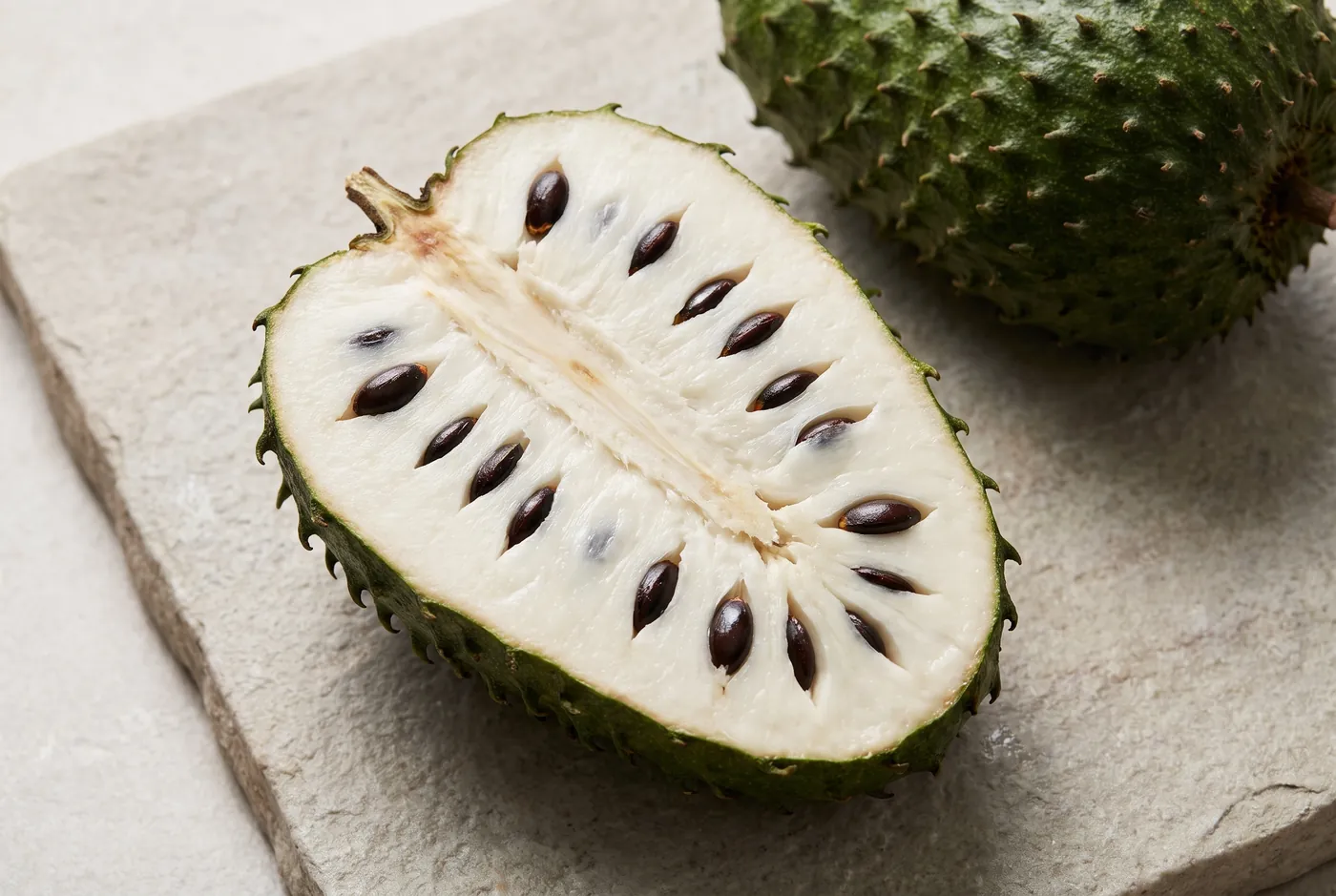
Tap a number to read what each part is.
- Length
- 15–30 cm
- Typical weight
- 1–4 kg
- Record weight
- ~7 kg
- Seeds per fruit
- 30–200
- Water content
- 81%
- Ripening
- 3–5 days off-tree
Anatomy
- It is a syncarp. What looks like one fruit is a fused aggregate of many individual carpels from a single flower. Each of those carpels is the bump under one spine, and each may hold one seed.
- The spines are soft. They are fleshy, recurved projections — vestigial remnants of the carpel tips, not thorns. On a ripe fruit they bend under a fingertip. This is the quickest way to tell a soursop from the genuinely spiky durian it is sometimes confused with.
- The pulp is segmented. Creamy white, fibrous, and naturally divided into lobes that separate cleanly around the seeds.
- The core is edible but tough. A fibrous central column runs from the stem through the fruit. Most people cut it out.
- The seeds are glossy black and toxic. Never chewed, never blended, never brewed. See the safety note below.
What it tastes like
The most common description is strawberry and pineapple with a sour citrus edge, carried on a thick, creamy, banana-custard body. Acidity drops and sweetness climbs sharply as it ripens, so the same fruit can taste bracingly tart one day and almost cloying two days later.
Texture is the surprise for most first-timers: it is closer to a soft custard or a fibrous mango than to a juicy fruit.
Do not eat the seeds
Soursop seeds contain concentrated annonacin and related acetogenins. They are not a health food, they are not a supplement, and grinding them into a smoothie is a genuinely bad idea. Scoop the pulp, spit the seeds, discard them.
How to tell when it is ripe
Buy it firm
- Color. Dark green, dulling slightly to a yellow-green as it matures. Deep glossy green with hard spines means it was picked too early and may never ripen properly.
- Spines. On a ready fruit they splay outward and flex easily.
- Feel. Firm with a slight give at the stem end — about the resistance of an avocado two days out.
- Avoid. Splits, weeping patches, black slime around the stem.
Then ripen it at home
- Counter, not fridge. Cold arrests ripening and causes skin blackening. Leave it out until it yields to gentle pressure all over — usually three to five days.
- Then refrigerate. Once soft it holds two or three days at most. Ripe soursop is one of the most perishable fruits in commerce.
- Or freeze. Scoop the deseeded pulp into bags and freeze it. The texture survives well and it blends straight from frozen.
A longer walkthrough of cutting and serving one is in SOPREME’s guide to how to eat soursop.
Nutrition
Raw soursop pulp. Source: USDA FoodData Central. Percentages are of the US Daily Value for an adult.
| Nutrient | Amount | % DV |
|---|
The honest read on this panel
Soursop is a good source of vitamin C and a genuinely useful source of fiber — a cup covers about a quarter of a day’s worth. Everything else is present in modest amounts. It is a nutritious fruit, on the order of other nutritious fruits; it is not a nutritional outlier.
It is also a sugary fruit
A whole cup carries around 30 g of naturally occurring sugar, comparable to a large banana and a half. That is fine as fruit. It becomes worth watching if you are drinking it by the liter, or if the juice you have bought has added sugar on top.
The forms you will actually encounter
Fresh soursop barely survives a supply chain, so most people meet it processed. What you choose changes what you get.
Fresh fruit
The full experience and the full nutrition, including the fiber. Realistically available only in tropical regions and in Latin, Caribbean and Southeast Asian markets elsewhere.
Frozen pulp
Deseeded pulp, frozen at source. Nutritionally very close to fresh and far easier to find. Check the bag for added sugar — plenty of brands sweeten it.
Juice
The most common form by a wide margin, and the most variable. The difference between 100% juice and a sweetened “nectar” is enormous, and the label is the only way to tell.
Leaf tea
A different plant part entirely — see The Tree. Caffeine-free, mild, and unrelated to the fruit’s vitamin C or fiber.
Bitters and tinctures
Concentrated alcohol or glycerin extracts, usually blended with other botanicals. Potency and composition vary wildly between products.
Capsules and extracts
Where the safety questions concentrate. These deliver doses of leaf or seed compounds no one would ever reach by eating fruit. Treat with real caution.